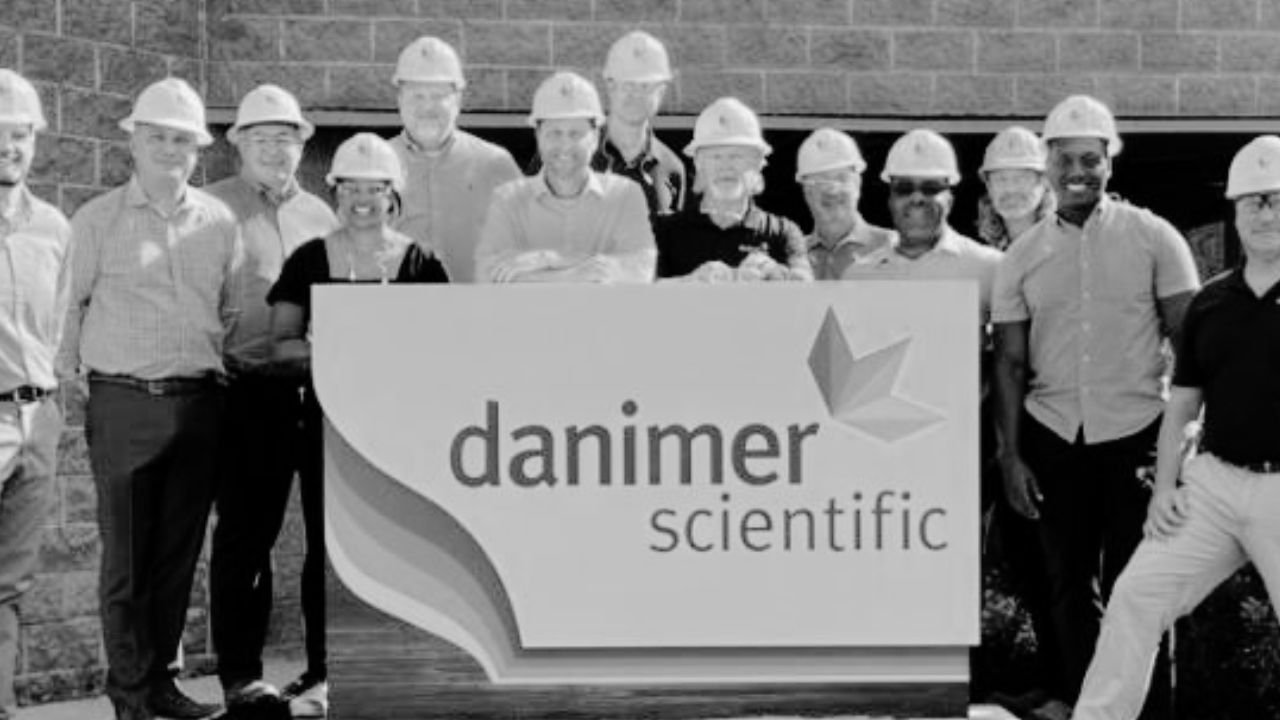
Danimer Scientific raised roughly $380 million through a 2020 SPAC merger, positioned itself as a leader in biodegradable bioplastics, and filed for Chapter 11 bankruptcy less than five years later. The short answer to whether it’s going out of business is yes — but the fuller picture is worth understanding.
This article covers who Danimer was, why the company collapsed financially, what its Chapter 11 filing and wind-down mean in practice, what the $19 million asset sale to Teknor Apex changes, and what all of this means for shareholders, customers, and the technology itself.
What Danimer Scientific Was and Why It Attracted So Much Capital
Danimer Scientific was a U.S.-based biotechnology and materials company headquartered in Bainbridge, Georgia. Its main product was PHA (polyhydroxyalkanoate) biopolymers — materials designed to replace conventional plastics and break down naturally after use.
The company went public through a SPAC merger in 2020, raising approximately $380 million in the process. That’s a significant capital base for a company still in the early stages of commercialization.
The timing seemed right. Demand for sustainable packaging was growing, and food packaging and consumer goods companies were under pressure to reduce their plastic footprints. Danimer’s pitch aligned neatly with those tailwinds. Despite the money raised and the favorable market environment, the company never reached profitable scale.
The Financial Reality Behind the Collapse
The numbers tell a difficult story. Revenue actually declined from around $79.5 million in 2022 to roughly $51.8 million in 2024 — not the trajectory investors had been told to expect. Danimer’s fiscal 2024 annual report showed revenue of about $53 million against roughly $50 million the prior year, which amounts to modest growth in a narrow window but doesn’t change the broader decline.
The deeper issue wasn’t just slow revenue growth. Danimer was operating with negative gross margins, meaning its cost of production exceeded what it earned from sales. Every unit shipped deepened the loss rather than contributing toward covering overhead.
Think of a bakery selling bread for $3 that costs $4 to make. Selling more bread doesn’t help — it just accelerates the losses. That’s essentially what Danimer was doing, at scale.
Net losses exceeded $100 million in fiscal 2024 alone, compared to nearly $95 million the year before. Operating losses were above $90 million in 2024. The gap between the company’s cost structure and its commercial output was not narrowing. It was widening.
What Pushed Danimer Into Chapter 11
The financial losses were the outcome. The causes ran deeper into how the business was structured and operated.
Danimer had expanded its manufacturing capacity significantly, but it couldn’t fill that capacity with enough customer orders to run efficiently. Think of a large hotel that built hundreds of rooms but only rents a few on most nights. The building still costs the same to maintain, but revenue barely covers the utilities. Fixed costs become a serious problem when volume doesn’t follow.
Customer commitments that were expected during the SPAC era didn’t fully materialize. Revenue projections made in 2020 turned out to be far more optimistic than reality supported. Meanwhile, cash tied up in expansion investments left the company with little buffer when operating cash flows stayed negative.
In November 2024, Danimer executed a 1-for-40 reverse stock split in an attempt to stay compliant with NYSE minimum price requirements. That kind of move is typically a sign of serious financial strain, not a solution to it. It changed nothing structurally.
On March 18, 2025, Danimer Scientific and its subsidiaries filed for Chapter 11 bankruptcy.
What “Orderly Wind-Down” Actually Means
Not all Chapter 11 cases end the same way. Some companies — major airlines, for example — have filed for bankruptcy protection, restructured their debt and operations, and come out the other side as functioning businesses. Danimer’s path was different from the start.
The company explicitly stated it would undertake an “orderly winddown of operations” rather than reorganize as a going concern. That’s a meaningful distinction. It means Danimer was not trying to fix and relaunch the business. It was planning to close it down as carefully as possible — keeping some operations running temporarily, maintaining manufacturing plants where it could, and working toward an asset sale.
During the wind-down, Danimer operated as a debtor-in-possession, which is standard in Chapter 11 proceedings. It allowed the company to continue functioning under court oversight while it worked through the process. From filing to completion took just over four months, which is relatively fast for bankruptcy proceedings of this kind.
The $19 Million Sale to Teknor Apex
Danimer’s assets were ultimately sold to Teknor Apex Company for approximately $19 million. That figure represents roughly 4.7% of the company’s total funded debt. To put that in perspective: the company raised around $380 million through its SPAC, accumulated substantial debt, and its assets sold for $19 million. That’s a significant destruction of value by any measure.
Teknor Apex is an established specialty polymer company, and the acquisition likely includes manufacturing equipment, intellectual property, and technical know-how related to PHA production. The technology itself doesn’t disappear — it changes hands.
Whether Teknor Apex continues developing PHA biopolymers or simply absorbs certain assets into existing operations remains to be seen. But customers who were working with Danimer’s materials may eventually find some continuity under the new owner, though likely with different terms, pricing, or product specifications.
What This Means for Shareholders, Creditors, and Customers
For common shareholders, the outcome is almost certainly a total loss. In Chapter 11 cases involving asset sales at distressed prices, equity holders are typically last in line and rarely recover anything meaningful. The 1-for-40 reverse stock split in late 2024 didn’t change that trajectory — it was a compliance measure, not a recovery plan.
Creditors fared poorly as well. With the asset sale representing only about 4.7% of total funded debt, most creditors recovered only a fraction of what they were owed.
For customers — particularly food packaging and consumer goods companies that had piloted Danimer’s PHA materials — the near-term concern is supply disruption. Any company that built a sourcing relationship or product line around Danimer’s biopolymers now needs to assess what Teknor Apex will offer, and whether a transition is feasible.
It’s worth noting that Danimer’s collapse doesn’t necessarily reflect a failure of PHA technology itself. The evidence points to execution challenges, cost structure problems, and scale-up difficulties — not a fundamental flaw in the underlying science. Bioplastics remain an active area of development, and other companies are working on similar materials.
What Danimer’s Story Says About SPAC-Era Climate Ventures
Danimer’s arc is one of the cleaner examples of how SPAC-era optimism could outpace operational reality. The 2020 SPAC boom brought a wave of early-stage companies into public markets with ambitious growth projections and significant capital raises. Sustainable materials, clean energy, and green technology were particularly popular.
What many of those projections didn’t fully account for were the practical difficulties of scaling advanced manufacturing: the time it takes to secure long-term customer commitments, the cost disadvantages of operating below capacity, and the financial runway required to bridge early losses while building toward profitability.
Danimer had a real technology, real customers, and real market demand working in its favor. What it couldn’t solve was the economics of producing at a cost that the market would support. That’s a harder problem than a well-designed investor presentation can fully convey.
For investors and analysts evaluating similar companies, the lesson is worth internalizing: gross margins, capacity utilization rates, and the actual firmness of customer commitments matter more than headline revenue numbers or market size projections. If a company is losing money on every unit it ships, growth is not a solution.
For more context on business performance, financial health indicators, and what to watch for in early-stage companies, StepBusinessVoice covers these topics in plain, practical terms.
So Is Danimer Scientific Going Out of Business?
Yes. As a standalone operating company, Danimer Scientific has effectively gone out of business. It filed for Chapter 11 bankruptcy in March 2025, chose an orderly wind-down over reorganization, and sold its assets to Teknor Apex for $19 million — a fraction of the capital it once raised.
The corporate entity may still exist in some legal form through the tail end of bankruptcy proceedings, but Danimer is no longer operating as an independent bioplastics company in any practical sense.
What survives is the technology — transferred to a new owner, with an uncertain but not impossible path forward. The bioplastics space isn’t finished because Danimer failed. But Danimer itself is.
Also Read: